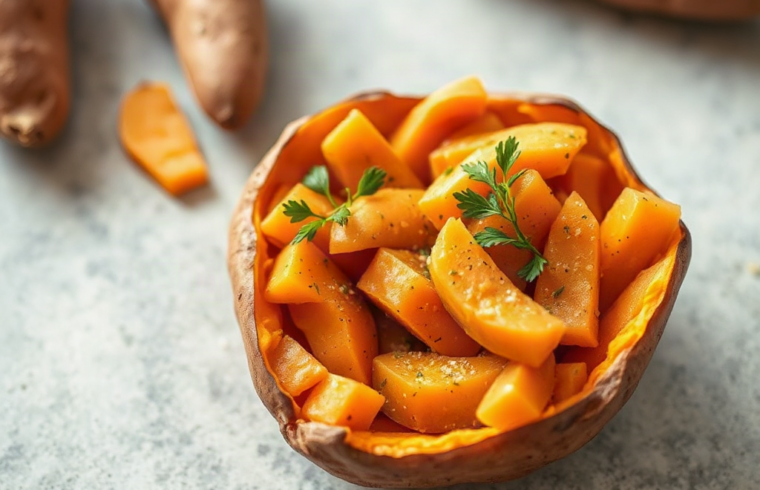
A practical sweet potato serving for weight loss is about 1/2 to 1 cup cooked at a meal, adjusted for appetite, activity, total carbohydrate needs, and the rest of the plate. Sweet potatoes provide fiber and carbohydrate, but portion size, cooking method, and toppings determine how easily they fit a calorie deficit. Pair the serving with protein and non-starchy vegetables rather than treating it as an unlimited low-calorie food. Choose the smaller portion when the meal includes other starches, and the larger portion after substantial activity or when sweet potato is the meal’s only concentrated carbohydrate.
How Much Sweet Potato Should You Eat?
A useful starting portion is 1/2 to 1 cup of cooked sweet potato, but that range is a meal-planning tool rather than a universal prescription. The appropriate amount changes with body size, activity, appetite, dietary pattern, and the other carbohydrate foods on the plate. Someone having sweet potato beside chicken and a large salad may use a different portion than someone eating it in a bowl that also contains beans, corn, and avocado.
The smaller end of the range suits meals with another concentrated carbohydrate, such as rice, bread, pasta, beans, or fruit. A larger serving may be reasonable when sweet potato is the only starch, the meal follows prolonged exercise, or the person finds a smaller portion leaves them hungry enough to snack soon afterward. Weight loss depends on the broader energy balance over time, so no single serving creates or prevents progress by itself.
| Meal Situation | Practical Starting Serving | What to Check |
|---|---|---|
| Another starch is included | About 1/2 cup cooked | Keep both starch portions modest |
| Sweet potato is the only starch | About 3/4 to 1 cup cooked | Add protein and vegetables |
| Lower-activity meal | About 1/2 cup cooked | Adjust if hunger returns quickly |
| Meal after substantial activity | About 1 cup cooked | Consider activity duration and total meal size |
Visual estimates can help when measuring cups are inconvenient. Half a cup is roughly a small cupped-hand portion, although hand sizes and the density of mashed or cubed food vary. Weighing food may offer more consistency, but it is not required for everyone. Measuring a few times at home can make later visual estimates more reliable without turning every meal into a calculation.
A common mistake is counting one whole sweet potato as one standardized serving. Sweet potatoes differ substantially in size, and restaurant portions may be much larger than a small potato prepared at home. Judge the amount on the plate rather than the number of potatoes used. If progress has stalled, check portion size and added fats before removing sweet potatoes entirely; the issue may be the total meal rather than the vegetable itself.
Why Does the Rest of the Plate Matter?
Sweet potato works best in a weight-conscious meal when it fills the starch role instead of being added to an already complete plate. It supplies carbohydrate along with fiber and micronutrients, yet it does not provide enough protein to make most meals satisfying on its own. Pairing it with a meaningful protein source and non-starchy vegetables usually creates a more substantial meal than eating a plain potato and relying on willpower until the next meal.
For example, a plate might contain roasted sweet potato, baked fish, and green beans. A plant-based version could combine a moderate sweet potato portion with tofu and roasted broccoli. Beans can contribute protein and fiber, but they also add carbohydrate; when beans and sweet potato appear together, reducing one or both portions may keep the meal aligned with the eater’s calorie and carbohydrate targets.
Protein and high-volume vegetables affect serving decisions because they change fullness without requiring a very large starch portion. Practical protein options include eggs, plain Greek yogurt used as a topping, chicken, fish, tofu, tempeh, cottage cheese, or legumes. Non-starchy vegetables such as spinach, cabbage, cauliflower, peppers, mushrooms, zucchini, or salad greens add volume and texture. The goal is not to make sweet potato a minor garnish, but to avoid expecting it to perform every nutritional job.
Liquid calories and side dishes can quietly change the calculation. A sweet potato served with a sugary drink and a creamy side is different from the same portion served with water, lean protein, and vegetables. Likewise, a breakfast bowl containing sweet potato, granola, nut butter, dried fruit, and sweetened yogurt may be nutrient-dense but still energy-dense. Healthy ingredients do not cancel one another’s calories.
Use a simple plate check before changing the sweet potato itself:
- Protein: Is there a distinct protein source rather than a token amount?
- Produce: Are non-starchy vegetables contributing substantial volume?
- Starch: Is sweet potato replacing or doubling up with bread, rice, or another starch?
- Extras: Are sauces, oils, cheese, or sweet toppings larger than intended?
The weak assumption to avoid is that fiber makes portion size irrelevant. Fiber may contribute to fullness, but a large serving can still push a meal beyond a person’s energy needs, especially when paired with generous fats. Balance the complete plate first, then alter the sweet potato portion if hunger or progress suggests the starting amount is not working.
Which Cooking Methods and Toppings Work Best?
Baking, steaming, boiling, microwaving, and air-frying with a measured amount of oil can all fit a weight-loss eating pattern. The meaningful difference often comes from added fat, sugar, and serving format rather than from the sweet potato itself. Boiled cubes, a baked whole potato, and mashed sweet potato can have very different calorie totals once oil, butter, syrup, cream, or cheese enters the recipe.
Oil deserves attention because it is easy to pour more than intended onto roasted cubes or fries. Measuring it before tossing the potatoes gives better portion control than pouring directly from the bottle. Parchment paper, a well-heated pan, or an air fryer can create browned edges with less oil, although an air fryer does not automatically make food low-calorie. The amount of oil still matters.
Mashed preparations require the same scrutiny. Plain mashed sweet potato is different from a casserole made with butter, brown sugar, marshmallows, and a nut topping. Those additions may be appropriate for an occasional holiday dish, but its serving should not be treated like an everyday portion of plain vegetables. For routine meals, moisture and flavor can come from plain yogurt, a little milk, cinnamon, smoked paprika, chili, garlic, lime, or fresh herbs.
Texture also influences how people serve and eat the food. Sweet potato fries are easy to eat rapidly and are often paired with calorie-dense dips, while a whole baked potato tends to preserve a visible portion boundary. Purees and soups can be satisfying, but blended recipes may contain coconut milk, cream, or oil that is not obvious from appearance. Check the full recipe rather than assigning the calories only to the sweet potato.
A practical comparison is a medium baked sweet potato topped with cottage cheese and salsa versus a tray of roasted sweet potato cubes coated freely with oil. The first option offers a clear serving boundary and added protein. The second can still fit, but oil and repeated handfuls make intake harder to estimate. Neither preparation is morally better; one is simply easier to portion consistently.
Support Your Weight Loss Goals Huge Discount on the Best Certified Organic Nutrient Dense Supplement!
The frequent failure mode is choosing a sensible sweet potato amount while overlooking toppings. If the meal repeatedly exceeds its intended size, measure calorie-dense additions for a week before shrinking the potato. That check preserves a filling whole-food portion while identifying whether butter, oil, nut butter, cheese, or sauce is driving the mismatch.
How to Adjust Your Serving in Real Meals
Serving guidance becomes useful only when it is adjusted using repeated observations rather than a single day on the scale. Start with a consistent portion for several comparable meals, then assess fullness, snacking, energy during normal activities, and the longer-term direction of body weight. Daily weight can move for reasons unrelated to fat change, including hydration, sodium intake, and digestive contents, so one reading should not trigger an immediate food restriction.
Signs that the portion may be too small include persistent hunger shortly after a balanced meal, difficulty concentrating, or repeated unplanned snacking that raises total intake beyond what a slightly larger meal would have provided. Before adding more sweet potato, confirm that the meal contains enough protein and vegetables. If those pieces are present, adding a modest amount of sweet potato may be more effective than trying to tolerate an unsatisfying plate.
A portion may be larger than needed when the meal leaves uncomfortable fullness, sweet potato consistently remains uneaten, or several starches are present without a clear reason. Slow or absent weight change over multiple weeks may also justify reviewing portions, but sweet potato should not be singled out automatically. Drinks, cooking oils, restaurant meals, snacks, and weekend eating can have a larger effect than a measured serving of a whole food.
Meal timing is secondary to total intake and personal tolerance. Some people prefer sweet potato at lunch because it supports a satisfying afternoon; others use it at dinner or around exercise. There is no need to avoid it at night solely because it contains carbohydrate. A late meal can still fit a weight-loss plan, although eating very large portions close to bedtime may feel uncomfortable for some people.
Use this adjustment sequence:
- Choose a starting amount based on whether another starch is present.
- Pair it with a clear protein source and non-starchy vegetables.
- Measure oils and rich toppings until their usual amounts are understood.
- Track hunger and meal satisfaction for several similar occasions.
- Change only one element at a time, using small portion adjustments.
People managing diabetes, digestive conditions, kidney disease, or clinician-directed carbohydrate targets may need individualized advice rather than a general serving range. Preparation, total carbohydrate at the meal, medications, and personal glucose response can all affect the decision. A registered dietitian or qualified healthcare professional can help translate medical needs into an appropriate portion without presenting sweet potato as a treatment.
An approach is working when the serving is easy to repeat, meals remain satisfying, toppings stay intentional, and the broader eating pattern supports gradual progress. It is failing when portions become increasingly restrictive, hunger drives rebound eating, or measurement creates excessive anxiety. In that situation, simplify the plate and seek individualized nutrition support rather than continuing to reduce one food.
Frequently Asked Questions
Can I eat sweet potatoes every day while losing weight?
Yes, they can appear daily if portions fit your total intake and meals include varied proteins, vegetables, fruits, and other nutrient sources. Daily use is optional, not necessary for weight loss.
Is half a sweet potato a reasonable serving?
It can be, but the potato’s size matters. Judge the cooked volume when possible; about 1/2 cup is a useful starting amount when another starch is included.
Are sweet potatoes better than white potatoes for weight loss?
Neither guarantees better results. Both can fit, and serving size, toppings, cooking method, meal balance, and personal preference usually matter more than choosing one exclusively.
Should I eat the sweet potato skin?
The cleaned, cooked skin is edible and adds texture and fiber. Remove damaged areas, wash the potato thoroughly, and skip the skin if its texture or your digestive tolerance is a concern.
Do sweet potato fries fit a weight-loss diet?
They can fit occasionally, but fried or heavily oiled versions are more energy-dense and easier to overeat. Use a defined portion and account for oil and dipping sauces.
Conclusion
Treat sweet potato as the meal’s starch component, then build around it with protein and non-starchy vegetables. Begin with a moderate cooked portion, use less when bread, rice, beans, or another starch is already present, and consider more when activity and appetite justify it. Preparation deserves equal attention: measured oil and deliberate toppings make portions easier to evaluate than loosely poured fats or sweet additions.
Apply the same serving for several comparable meals before making a judgment. Check whether it keeps you satisfied, whether extras remain controlled, and whether your broader pattern is moving in the intended direction over time. If progress stalls, review the full meal and weekly intake before cutting out sweet potatoes. Medical conditions or prescribed carbohydrate targets call for individualized guidance from a qualified professional.